“The reason the rail model cannot simply be copied to buses”
As Transit management tries to move the Bus Command Center to model the Rail Control Center, some very basic but extremely important differences are not being realized.
Here is what is being overlooked.
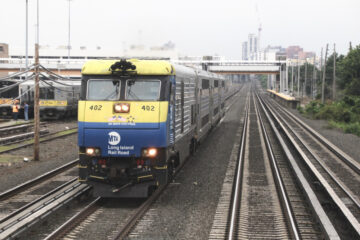
At New York City Transit, the New York City Transit Rail Control Center and the New York City Transit Bus Command Center are structured differently because the systems they manage behave completely differently.
1. Rail is a Closed System
Subways operate in a controlled environment.
- Trains run on fixed tracks
- Movement is governed by signals and switches
- The control center can directly control train movement
If something happens, Rail Control can:
- Hold trains
- Reroute trains
- Control track switches
- Shut off power
Everything happens within infrastructure owned and controlled by transit.
2. Buses Operate in an Open System
Buses operate in public traffic with constant outside variables.
They deal with:
- Traffic congestion
- Accidents
- Construction
- Police activity
- Weather
- Passenger incidents
- Blocked bus stops
Because of this, the Bus Command Center cannot physically control buses the way rail control can control trains.
Instead, they rely on:
- GPS tracking
- Radio communication
- Field supervisors
- Depot dispatchers
3. Why Dispatchers on the Road Are Critical
A rail controller can move trains from a computer.
A bus controller cannot move traffic or clear a street.
For buses, many problems require physical intervention, such as:
- Turning buses around
- Setting up detours
- Filling service gaps
- Handling incidents
- Managing crowding
That’s why road dispatchers and supervisors are essential in a bus system.
Without them:
- Buses bunch
- Headways collapse
- Routes break down
- Operators are left without guidance
4. Technology Doesn’t Replace Field Operations
Systems like:
- BusTrek
- OMNY
give management information, but they don’t fix service problems on the street.
A computer can see a bus is late.
Only a dispatcher can correct the service.
5. The Big Operational Misconception
Management sometimes tries to treat the Bus Command Center like the Rail Control Center, assuming centralized monitoring can replace field dispatching.
But buses are not trains.
Subways are controlled by signals and infrastructure.
Buses are controlled by people in the field managing real-world conditions.
✅ Bottom line:
The Rail Control Center controls the system directly, while the Bus Command Center coordinates people who control the system on the street.
That’s why removing road dispatchers and relying only on centralized monitoring often creates service problems instead of solving them.